
Epiphany 4, Year A
Micah 6:1-8
Psalm 15
1 Corinthians 1:18-31
Matthew 5:1-12
This month, I had a longtime dream finally come true. To celebrate the 25th anniversary of the release of the first film in the Lord of the Rings trilogy, the films were re-released in theaters. Having never had the opportunity to see the films in the theater when they first came out, I jumped at the opportunity to see my favorite fantasy story on the big screen for the first time.
After watching all three films again, I found myself reflecting on how differently they feel now that I am an adult. One of the biggest differences I noticed was the shift in the heroes who resonated with me then and now. As a child, I was drawn to the mighty, nearly-mythical figures who aided the Fellowship: ancient, graceful elves like Elrond and Galadriel; wise and powerful wizards like Gandalf; and the strong, noble Aragorn, the last true heir in a line of great kings.
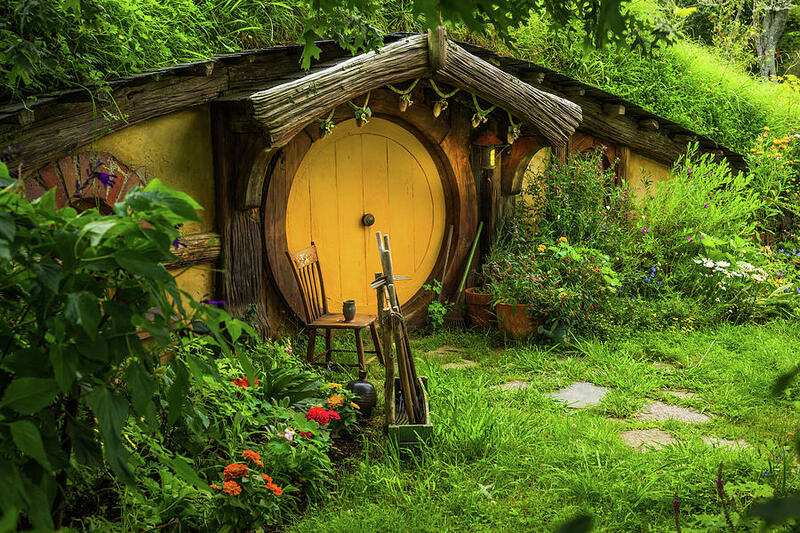
But none of these are really the heroes of The Lord of the Rings. The heroes are hobbits, a diminutive people not known for great valor or wisdom. They value good meals, stories, parties, and, to quote Tolkien, “Peace, and quiet, and good tilled earth, for all Hobbits share a love of things that grow.” As the story begins, our four Hobbit heroes are thrust into a quest they did not seek, one that takes them far from their physical and emotional comfort zones.
As a child, it bothered me that the Hobbits always seemed just “along for the ride” for most of the quest, constantly needing saving by the other heroes of the Fellowship. Most perplexing was that Frodo, the main character of this great epic, seemed to be the most inept of the bunch and ultimately failed at the very end of his quest. He refuses to destroy the ring at the end, and it is only Gollum biting off his finger that parts him from it.
As children, our ideas of what we can be and do when we grow up are limited only by our imagination. We want to be astronauts or movie stars or the President of the United States—perhaps even all of these. Parents nurture these dreams because they help to motivate children to work hard. Yet, as we grow, most of us discover that we are ordinary people, and only a few see those lofty dreams fulfilled.
Looking at my life now—a life spent enjoying the company of friends, savoring good meals, tending the earth when I can, and relishing the comforts of home—I realize that I am, quite indisputably, a Hobbit. My closest loved ones are Hobbits, too. For years, I identified with the other heroes of the Fellowship. But now, as an adult, I finally understand Hobbits and why they are central to the story.
For those of you who have read the books and seen the films, you will know that the endings diverge significantly. In the film, the Hobbits Frodo, Sam, Merry, and Pippin return home to a Shire seemingly exactly as they left it to live out their days in peace. In the book, however, things are much different. They return from their quest against evil to find that evil has found their home. The evil wizard Saruman, weakened but still powerful, has set himself up as the ruler of the Shire, backed by a gang of petty thugs. This doesn’t happen by conquest, but because Hobbits are naturally too polite and conflict-averse to speak up against it, and most importantly, because they don’t know what tyranny looks like.
Saruman’s chief enforcer buys up the Shire’s land, destroying it through mass industrialization, cutting down its forests and polluting its air and water. Food shortages become commonplace. Guards patrol the borders and the streets limiting and regulating movement, enforcing curfews and arbitrary rules, and “if you don’t know them you get into trouble.” A guard tells the returning hobbits “You’re not allowed to go talking about things, or asking questions.”
It is only because Frodo, Sam, Merry, and Pippin have seen what evil and tyranny looks like in their fight against the Dark Lord Sauron that they understand what is happening to their home. This time, they don’t have Gandalf or Aragorn or any other conventionally heroic figures there to help them. This time, it’s their friends and neighbors, ordinary Hobbits, who they organize into a resistance that ultimately drives Saruman and his thugs out of the Shire.
The hobbits of this resistance are not soldiers or strategists. They are those who had enough of the violence and cruelty that had warped their home into something unrecognizable to them. They are those who refused the intoxication of petty power over their neighbors that they would have gained by becoming servants of Saruman.
Some of us Hobbits may be called to do something singularly brave and noble in the face of great evil. The first film in the Lord of the Rings trilogy came out at Christmas in 2001, just three months after the attacks of September 11th, a day when many ordinary people found themselves thrust into moments of extraordinary courage. Most of us, however, are confronted with evils that creep in in subtler ways and become more malignant and overt as they grow unchecked.
The evil is here at home. We can’t rely on the more powerful or more important to confront it for us, and we can’t confront it by ourselves.
The Church in this country has not been truly challenged to take a stand and confront such a systemic evil in a very long time, not since the Civil Rights Movement. But we are waking up. A few weeks ago, at a vigil for Renee Good, the Episcopal Bishop of New Hampshire, Rob Hirschfield, called out the “cruelty, the injustice, and the horror…unleashed in Minneapolis.” Speaking about how he was preparing his clergy for the time at hand, he said: “I’ve asked them to get their affairs in order and to make sure they have their wills written, because it may be that now is no longer the time for statements, but for us with our bodies to stand between the powers of this world and the most vulnerable.”
“Consider your own call, brothers and sisters: not many of you were wise by human standards, not many were powerful, not many were of noble birth. But God chose what is foolish in the world to shame the wise; God chose what is weak in the world to shame the strong; God chose what is low and despised in the world, things that are not, to reduce to nothing things that are, so that no one might boast in the presence of God.”
The church of today is a far cry from the influential and powerful institution it was during the Civil Rights Movement. In most places, it is dwindling, aging, and dismissed as irrelevant. And yet, it is not in spite of this that we are called to act, but because of it. We are stirred to life because the odds seem impossible, because the darkness seems so great and insurmountable. To the powerful, we are weak, we are foolish, we are dying, we are low—and we glory in the Cross imperishable, in the message invincible that we will love the neighbor the world tells us to hate, we will shield the vulnerable the world tells us to hurt, we will die bodily before the world destroys us spiritually.
Early on in The Fellowship of the Ring, before Frodo has even left the Shire, he expresses his misgivings to Gandalf about his sudden inheritance of the ring. “I wish the ring had never come to me. I wish none of this had happened,” he laments. Gandalf replies, “So do all who live to see such times. But that is not for them to decide. All we have to decide is what to do with the time that is given to us.”
We are in this time, in this place, in this flash of human history, not by accident. But just because we may not be leading the great struggle of our time does not mean we have no part to play. Consider these things God asks of us, my friends. Love justice, and speak and act loudly against injustice. Do kindness, to your neighbors—all your neighbors—and especially those who need your help the most. Walk humbly with your God. Do these things because it is right, because it is virtuous, not out of hope for gain.
Do these things, friends, and when you are discouraged, remember that God calls us to this fight because there is some good in this world, and it’s worth fighting for. Amen.